

Showing posts with label Motivational. Show all posts
Showing posts with label Motivational. Show all posts
Monday, 15 October 2012

Friday, 28 September 2012
Sunday, 23 September 2012
Wednesday, 27 June 2012
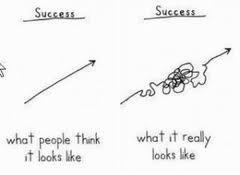
So, You Didn't Get Drafted
Here is some GREAT advice by Ross Mclean. I met Ross in Finland! Great hockey mind and straight shooter. Every player should read this!! Click Here!
Thursday, 7 June 2012
What Makes A Nightmare Sports Parent -- And What Makes A Great One
What Makes A Nightmare Sports Parent -- And What Makes A Great One
Wednesday, February 15, 2012 8:20 pm


Hundreds of college athletes were asked to think back: "What is your worst memory from playing youth and high school sports?"
Their overwhelming response: "The ride home from games with my parents."
The informal survey lasted three decades, initiated by two former longtime coaches who over time became staunch advocates for the player, for the adolescent, for the child. Bruce E. Brown and Rob Miller of Proactive Coaching LLC are devoted to helping adults avoid becoming a nightmare sports parent, speaking at colleges, high schools and youth leagues to more than a million athletes, coaches and parents in the last 12 years.
Those same college athletes were asked what their parents said that made them feel great, that amplified their joy during and after a ballgame.
Their overwhelming response: "I love to watch you play."
There it is, from the mouths of babes who grew up to become college and professional athletes. Whether your child is just beginning T-ball or is a travel-team soccer all-star or survived the cuts for the high school varsity, parents take heed.
To Read the rest of this article, Click Here!
Monday, 4 June 2012
Inspiring elementary schooler with cerebral palsy runs amazing 400-meter race
Watch the Video Here! A must see!
The young man who refuses to be beaten by his own limitations in the video above is Matt W. (last name unknown), who attends Worthington (Ohio) Colonial Hills Elementary School. Like most elementary schools in America, Colonial Hills has a once-a-year track and field day, and like most kids, Matt was clearly eager to take part.
However, unlike most of his peers, Matt suffers from spastic cerebral palsy, a debilitating condition that limits his ability to undergo rigorous physical exercise of any kind. Incredibly, despite knowing those limitations, Matt decided to run the 400-meter event (roughly quarter of a mile) on the school's 200-meter track.
The result was absolutely inspiring. While all the other students in the event finished far in front of Matt, the student athlete simply refused to stop running, chugging his way around the track on his own, even as it appeared he might collapse.
Naturally, the inspirational Colonial Hills student needed plenty of encouragement, and he first got that from the school's gym teacher, John Blaine, who trotted up alongside his pupil and walked and then ran alongside him for the remainder of the race.
Then, after all the other fifth- and sixth-graders in the race had finished, they joined in, running over to follow Matt around the track and chanting, "Let's go Matt, let's go!" until he finished, spun around, hugged his gym teacher and then accepted a series of high fives from fellow students, all while his mother watched on, sobbing with emotion from the kindness shown to her son.
It's an inspiring video that shows the power of positive thinking and what children can do with a little encouragement. No matter what Matt's athletic future holds, he, his family and his classmates will always have his gritty, inspiring and joyous 400-meter jaunt during an elementary school field day to look back upon and smile.
Wednesday, 30 May 2012
Come Back Story - Road to London: Brittany Rogers
Miracles in sports have become so clichéd, the word usually attracts more eye-rolls than believers.
But Canadian gymnast Brittany Rogers doesn’t shy away from the term when describing her improbable return to gymnastics.
Rogers broke her inner ankle bone at the 2010 Pacific Rim Championships in Australia on a faulty double pike dismount from the balance beam.
The 18-year-old from Coquitlam, B.C. thought her gymnastics career was over.
“Not being able to do gymnastics is something I can’t explain, it was like losing someone I love,” said Rogers. “But it was a good lesson I learned. When it was taken away from me, I realized how much I really love the sport.”
Rogers saw two different surgeons, who both advised a cast on her ankle to allow it to heal over a two-month period.
But the bone did not heal.
Rogers sought a third opinion from Dr. Dory Boyer, an orthopedic surgeon based in New Westminster, B.C., who was also the medical services manager for the Vancouver Organizing Committee during the 2010 Winter Games.
Dr. Boyer got Rogers into surgery and put a pin in her ankle bone to keep it together. He also removed bone chips that had been floating around her ankle and preventing her from moving it.
That Christmas, eight months after sustaining the injury that had threatened to end her career, Rogers started to walk again.
“It was my Christmas miracle,” she said. “[My ankle] was sore and a little weak, but I could deal with that, because I knew I was on my way back to gymnastics.”
Rogers credits Dr. Boyer for her recovery, who she says has become a good friend. The two still keep regular appointments to monitor her ankle, but Rogers says she also visits Dr. Boyer for mental support.
“He’s the only one who knows what it’s really like, because he’s actually been inside my ankle,” said Rogers. “I honestly wouldn’t be here without him and his surgery.”
Rogers returned to competition at the 2011 Canadian Gymnastics Championships in Charlottetown, P.E.I.
“I don’t think I’ve ever been so nervous,” said Rogers. “I felt like I was a novice again.”
She ended up placing fourth in the all-around competition.
“I didn’t have any expectations for myself,” she added. “It was nice to just go out there and do it for myself and come back from such a big injury.”
Rogers has come a long way since making her big comeback. She helped the Canadian team to an Olympic berth at the Test Event in January, and now has her sights set on making the women’s artistic gymnastics Olympic team.
She has reached the podium in almost every event in which she has competed this year; most notably with three apparatus gold medals: two for uneven bars, one on floor. She is currently ranked eighth in the world on vault by gymnastics’ international governing body, FIG.
Most recently, Rogers added to an impressive season by taking home a silver medal on vault and finishing sixth all-around at the 2012 Canadian Gymnastics Championships in Regina last week.
The results of the competition make up 40 per cent of the Olympic selection committee’s decision when selecting members of the national team. The remaining 60 per cent is based on the Olympic selection camp in Gatineau, Que. at the end of June, with results from other meets throughout the year also taken into account.
“Even if I don’t make the team, I did help qualify the team for the Olympics. Whatever happens, I’m just happy that I’ve contributed this much, this far,” said Rogers. “I’m in love with gymnastics, and it’s kind of hard to explain love, whether it’s in relationships or sports.
“It’s been such a struggle, I think it’s kind of made me who I am today. I wouldn’t trade that for the world.”
But Canadian gymnast Brittany Rogers doesn’t shy away from the term when describing her improbable return to gymnastics.
Rogers broke her inner ankle bone at the 2010 Pacific Rim Championships in Australia on a faulty double pike dismount from the balance beam.
The 18-year-old from Coquitlam, B.C. thought her gymnastics career was over.
“Not being able to do gymnastics is something I can’t explain, it was like losing someone I love,” said Rogers. “But it was a good lesson I learned. When it was taken away from me, I realized how much I really love the sport.”
Rogers saw two different surgeons, who both advised a cast on her ankle to allow it to heal over a two-month period.
But the bone did not heal.
Rogers sought a third opinion from Dr. Dory Boyer, an orthopedic surgeon based in New Westminster, B.C., who was also the medical services manager for the Vancouver Organizing Committee during the 2010 Winter Games.
Dr. Boyer got Rogers into surgery and put a pin in her ankle bone to keep it together. He also removed bone chips that had been floating around her ankle and preventing her from moving it.
That Christmas, eight months after sustaining the injury that had threatened to end her career, Rogers started to walk again.
“It was my Christmas miracle,” she said. “[My ankle] was sore and a little weak, but I could deal with that, because I knew I was on my way back to gymnastics.”
Rogers credits Dr. Boyer for her recovery, who she says has become a good friend. The two still keep regular appointments to monitor her ankle, but Rogers says she also visits Dr. Boyer for mental support.
“He’s the only one who knows what it’s really like, because he’s actually been inside my ankle,” said Rogers. “I honestly wouldn’t be here without him and his surgery.”
Rogers returned to competition at the 2011 Canadian Gymnastics Championships in Charlottetown, P.E.I.
“I don’t think I’ve ever been so nervous,” said Rogers. “I felt like I was a novice again.”
She ended up placing fourth in the all-around competition.
“I didn’t have any expectations for myself,” she added. “It was nice to just go out there and do it for myself and come back from such a big injury.”
Rogers has come a long way since making her big comeback. She helped the Canadian team to an Olympic berth at the Test Event in January, and now has her sights set on making the women’s artistic gymnastics Olympic team.
She has reached the podium in almost every event in which she has competed this year; most notably with three apparatus gold medals: two for uneven bars, one on floor. She is currently ranked eighth in the world on vault by gymnastics’ international governing body, FIG.
Most recently, Rogers added to an impressive season by taking home a silver medal on vault and finishing sixth all-around at the 2012 Canadian Gymnastics Championships in Regina last week.
The results of the competition make up 40 per cent of the Olympic selection committee’s decision when selecting members of the national team. The remaining 60 per cent is based on the Olympic selection camp in Gatineau, Que. at the end of June, with results from other meets throughout the year also taken into account.
“Even if I don’t make the team, I did help qualify the team for the Olympics. Whatever happens, I’m just happy that I’ve contributed this much, this far,” said Rogers. “I’m in love with gymnastics, and it’s kind of hard to explain love, whether it’s in relationships or sports.
“It’s been such a struggle, I think it’s kind of made me who I am today. I wouldn’t trade that for the world.”
Tuesday, 29 May 2012
Anyways!
Fantastic Read!!
The Paradoxical Commandments were written in 1968 by Kent Keith and are contained in a book called AnyWay
People are illogical, unreasonable, and self-centered.
Love them anyway.
If you do good, people will accuse you of selfish ulterior motives.
Do good anyway.
If you are successful, you will win false friends and true enemies.
Succeed anyway.
The good you do today will be forgotten tomorrow.
Do good anyway.
Honesty and frankness make you vulnerable.
Be honest and frank anyway.
The biggest men and women with the biggest ideas can be shot down by the smallest men and women with the smallest minds.
Think big anyway.
People favor underdogs but follow only top dogs.
Fight for a few underdogs anyway.
What you spend years building may be destroyed overnight.
Build anyway.
People really need help but may attack you if you do help them.
Help people anyway.
Give the world the best you have and you’ll get kicked in the teeth.
Give the world the best you have anyway.
I truly believe this is what keeps me teaching/coaching. Be true to yourself and always do the right thing. Keep your integrity!
The Paradoxical Commandments were written in 1968 by Kent Keith and are contained in a book called AnyWay
People are illogical, unreasonable, and self-centered.
Love them anyway.
If you do good, people will accuse you of selfish ulterior motives.
Do good anyway.
If you are successful, you will win false friends and true enemies.
Succeed anyway.
The good you do today will be forgotten tomorrow.
Do good anyway.
Honesty and frankness make you vulnerable.
Be honest and frank anyway.
The biggest men and women with the biggest ideas can be shot down by the smallest men and women with the smallest minds.
Think big anyway.
People favor underdogs but follow only top dogs.
Fight for a few underdogs anyway.
What you spend years building may be destroyed overnight.
Build anyway.
People really need help but may attack you if you do help them.
Help people anyway.
Give the world the best you have and you’ll get kicked in the teeth.
Give the world the best you have anyway.
I truly believe this is what keeps me teaching/coaching. Be true to yourself and always do the right thing. Keep your integrity!
Monday, 30 April 2012
How to Train Young People to be Successful at Work
How to Train Young People to be Successful at Work
Swen Nater - Click Here to read more articles from his Blog!
I work at Costco, in the corporate office. I’ve been here 17 years. I also played sports. I truly believe a sports coach can do much to help young people prepare to function successfully in a corporate office-type environment. By “successfully” I mean, be productive, be an asset, be likeable, help the company reach its goals, get promoted, and generally be happy.
I wrote down twelve things I thought were necessary to be successful here. Then, one by one, I determined if sports could prepare a person in that area. In each case, it could.
1. Discipline to get the job done right and on time
2. Working hard
3. Loving what you do
4. Discovering how to improve and move up
5. Being an effective member of a team that is working on something together
6. Being at work and being on time
7. Being creative
8. Being subordinate
9. Helping improve or change things
10. Being responsible and dependable
11. Knowing how to be led
12. Knowing how to lead
After I wrote them down, it hit me; John Wooden’s Pyramid of Success covers many of these. So, I went back and entered the Pyramid traits (in parenthesis).
1. Discipline to get the job done right and on time (DEPENDABILITY)
2. Working hard (INDUSTRIOUSNESS)
3. Loving what you do (ENTHUSIASM)
4. Discovering how to improve and move up (AMBITION)
5. Being an effective member of a team that is working on something together (TEAM SPIRIT, COOPERATION, FRIENDSHIP)
6. Being at work and being on time (INTEGRITY)
7. Being creative (RESOURCEFULNESS)
8. Being subordinate (LOYALTY)
9. Helping improve or change things (LOYALTY, COOPERATION, ALERTNESS)
10. Being responsible and dependable (RELIABILITY)
11. Knowing how to be led (LOYALTY, FAITH)
12. Knowing how to lead (POISE, CONFIDENCE)
I was so excited. Yeah! Through youth sports, The Pyramid can prepare someone to be a great worker and a great asset to any company. Cool!
So go tell your child, “Sign up for a team. Here’s a Pyramid of Success. Take it with you and make sure you get all of these things out of it.”
That sounds silly, right? A child can’t use the Pyramid of Success to prepare for the workplace; that’s the coach’s job. And I hear, some coaches have. If you know of someone who was trained in youth sports through the Pyramid, please call me. We want him or her at Costco. Thanks.
Swen Nater - Click Here to read more articles from his Blog!
I work at Costco, in the corporate office. I’ve been here 17 years. I also played sports. I truly believe a sports coach can do much to help young people prepare to function successfully in a corporate office-type environment. By “successfully” I mean, be productive, be an asset, be likeable, help the company reach its goals, get promoted, and generally be happy.
I wrote down twelve things I thought were necessary to be successful here. Then, one by one, I determined if sports could prepare a person in that area. In each case, it could.
1. Discipline to get the job done right and on time
2. Working hard
3. Loving what you do
4. Discovering how to improve and move up
5. Being an effective member of a team that is working on something together
6. Being at work and being on time
7. Being creative
8. Being subordinate
9. Helping improve or change things
10. Being responsible and dependable
11. Knowing how to be led
12. Knowing how to lead
After I wrote them down, it hit me; John Wooden’s Pyramid of Success covers many of these. So, I went back and entered the Pyramid traits (in parenthesis).
1. Discipline to get the job done right and on time (DEPENDABILITY)
2. Working hard (INDUSTRIOUSNESS)
3. Loving what you do (ENTHUSIASM)
4. Discovering how to improve and move up (AMBITION)
5. Being an effective member of a team that is working on something together (TEAM SPIRIT, COOPERATION, FRIENDSHIP)
6. Being at work and being on time (INTEGRITY)
7. Being creative (RESOURCEFULNESS)
8. Being subordinate (LOYALTY)
9. Helping improve or change things (LOYALTY, COOPERATION, ALERTNESS)
10. Being responsible and dependable (RELIABILITY)
11. Knowing how to be led (LOYALTY, FAITH)
12. Knowing how to lead (POISE, CONFIDENCE)
I was so excited. Yeah! Through youth sports, The Pyramid can prepare someone to be a great worker and a great asset to any company. Cool!
So go tell your child, “Sign up for a team. Here’s a Pyramid of Success. Take it with you and make sure you get all of these things out of it.”
That sounds silly, right? A child can’t use the Pyramid of Success to prepare for the workplace; that’s the coach’s job. And I hear, some coaches have. If you know of someone who was trained in youth sports through the Pyramid, please call me. We want him or her at Costco. Thanks.
Friday, 20 April 2012
Here's The Reason Why You Won't Be Successful
A lot of life comes down to doing hard things when you least feel like it.
If you are going to be successful over the long run, you’re going to have to do things that hurt on days when you already hurt, which seems to defy logic.
If you’re already not at peak performance, it might seem like a better option to recuperate and then go back into the battle. It’s what we’ve been taught since we were children.
If you’re not feeling well you don’t have to go to school. If you get hurt, you should “take it easy” for a while.
It is only natural that you might think that you can be successful while living life on easy terms.
And not just “easy” terms. Your terms.
The reality of success is that to get what you want from life, you are going to have to gut it out. At work, in relationships, leading your business — there are days when it is not so easy to do the right thing.
And somehow we try to justify doing the wrong thing by explaining that we’ll start doing better when we feel better. When the terms for success are better.
But anyone can play the game and do pretty well when the odds aren’t stacked against them. Anyone can conquer when the opponent doesn’t have a weapon.
The harder challenge is to do what is hard and fair and noble even when you don’t feel like it at all, when you are “sick and tired” and tired and sick.
Every day matters. Every minute matters.
You are sadly mistaken if you think you can be successful only when you feel like it. That has never been the secret to domination.
Think about this: the only thing that separates you and your dream from success is a battle. If you aren’t fighting, you just aren’t getting any closer to success. You aren’t.
That’s why every day matters. Why today matters.
There are no sick days. So get that out of your head, grab your sword, and start swinging.
This post originally appeared at Edgy Conversations.
Please follow Careers on Twitter and Facebook.
Follow Dan Waldschmidt on Twitter.
Read more: http://danwaldschmidt.com/2012/03/extreme-behavior/why-you-wont-be-successful#ixzz1sdfFqBkx
If you are going to be successful over the long run, you’re going to have to do things that hurt on days when you already hurt, which seems to defy logic.
If you’re already not at peak performance, it might seem like a better option to recuperate and then go back into the battle. It’s what we’ve been taught since we were children.
If you’re not feeling well you don’t have to go to school. If you get hurt, you should “take it easy” for a while.
It is only natural that you might think that you can be successful while living life on easy terms.
And not just “easy” terms. Your terms.
The reality of success is that to get what you want from life, you are going to have to gut it out. At work, in relationships, leading your business — there are days when it is not so easy to do the right thing.
And somehow we try to justify doing the wrong thing by explaining that we’ll start doing better when we feel better. When the terms for success are better.
But anyone can play the game and do pretty well when the odds aren’t stacked against them. Anyone can conquer when the opponent doesn’t have a weapon.
The harder challenge is to do what is hard and fair and noble even when you don’t feel like it at all, when you are “sick and tired” and tired and sick.
Every day matters. Every minute matters.
You are sadly mistaken if you think you can be successful only when you feel like it. That has never been the secret to domination.
Think about this: the only thing that separates you and your dream from success is a battle. If you aren’t fighting, you just aren’t getting any closer to success. You aren’t.
That’s why every day matters. Why today matters.
There are no sick days. So get that out of your head, grab your sword, and start swinging.
This post originally appeared at Edgy Conversations.
Please follow Careers on Twitter and Facebook.
Follow Dan Waldschmidt on Twitter.
Read more: http://danwaldschmidt.com/2012/03/extreme-behavior/why-you-wont-be-successful#ixzz1sdfFqBkx
Wednesday, 4 April 2012
The 10 Rules for Highly Effective Leadership
Powerful new book titled 212⁰ Leadership: The 10 Rules for Highly Effective Leadership.
In chapter 8, Mac talks about the importance of leaders “taking full
responsibility” and having a “personal accountability attitude” which
includes these reminders:
- YOU have more control over your destiny
- YOU become an active contributor rather than a passive observer
- OTHERS look to you for leadership
- YOU gain the reputation as a problem solver
- YOU enhance your career opportunities
- YOU enjoy the satisfaction that comes from getting things done … the power of positive doing
- YOU experience less anger, frustration and helplessness – all leading to better physical health
- YOU realize a positive spillover effect into your personal life at home
Lead well ... LEAD RIGHT!
Click Here to purchase the Book!
Monday, 26 March 2012
How To Be Brave
I love this video because it shows something you rarely see: the anatomy of a courageous moment.
Improvement isn’t just about getting better — it’s also about getting braver. It’s about encountering thresholds, and taking big, scary steps across them; it’s about jumping into uncharted territory where you don’t know if you’re going to fly or flop. This girl, who’s in the fourth grade, is experiencing the same kind of moment that happens on a theater stage, or on an athletic field or in an office, and she gets past it with a great bit of strategy.
- First, positivity. She assures herself that she’s going to do it, and she’s going to be fine.
- Second, simplicity. She’s not caught up in remembering a bunch of stuff, but focuses on two things. (Go straight. Don’t snowplow.)
Thursday, 15 March 2012
Read This Book
From the Website "The Talent Code" One of my Top 5 favorite websites!

For me, the best books are not the ones that come out of left field, dazzling you with their original genius.
No, the best books are ones that, the instant you read them, feel titanically obvious. The ones that take something right under your nose and show it to you in a way that makes the whole world pivot and seem fresh.
That’s why you should read The Power of Habit, By Charles Duhigg, who also happens to be a friend. Here’s the thesis:
Habits — automatic loops of behavior, triggered by cues, nourished by rewards, driven by cravings — make up a large percentage of our behavior.
To control your life, it helps to understand how these loops operate — to control the cues, rewards, and cravings. In short, the same neural machinery that makes you reach for a jelly donut can also make you reach for the tennis racquet or the math book, or perform a certain skill better, or build a productive practice routine.
In the book, Duhigg gives the example of the champion swimmer Michael Phelps. Phelps’s coach, the remarkable Bob Bowman, designed Phelps’s workouts as a series of strong, productive habits.
For example, each night Bowman would cue Phelps to “watch the videotape before you go to sleep and when you wake up.” There wasn’t an actual videotape — Bowman wanted Phelps to visualize himself performing every element of the perfect race. During practices, Bowman would have Phelps swim at race speed and tell him to “put in the videotape.” Eventually, at races, Bowman would simply whisper, “Put in the videotape.” (We know what happened next.)
There’s a great deal more, but my main takeaway is the crucial importance of the central craving. Strong habits are not built around a vague desires, but rather around deep and powerful cravings that dominate our conscious and unconscious minds, our identities.
To build good habits, then, put the craving first and foremost. Figure it out. Define it. Nourish it. Do everything to ignite and support the craving, because the craving is the engine around which powerful, productive habits can be built.
As Saint-Exupery said, “If you want to build a ship, don’t assign people tasks and work, but rather teach them to long for the endless immensity of the sea.”
For me, the best books are not the ones that come out of left field, dazzling you with their original genius.
No, the best books are ones that, the instant you read them, feel titanically obvious. The ones that take something right under your nose and show it to you in a way that makes the whole world pivot and seem fresh.
That’s why you should read The Power of Habit, By Charles Duhigg, who also happens to be a friend. Here’s the thesis:
Habits — automatic loops of behavior, triggered by cues, nourished by rewards, driven by cravings — make up a large percentage of our behavior.
To control your life, it helps to understand how these loops operate — to control the cues, rewards, and cravings. In short, the same neural machinery that makes you reach for a jelly donut can also make you reach for the tennis racquet or the math book, or perform a certain skill better, or build a productive practice routine.
In the book, Duhigg gives the example of the champion swimmer Michael Phelps. Phelps’s coach, the remarkable Bob Bowman, designed Phelps’s workouts as a series of strong, productive habits.
For example, each night Bowman would cue Phelps to “watch the videotape before you go to sleep and when you wake up.” There wasn’t an actual videotape — Bowman wanted Phelps to visualize himself performing every element of the perfect race. During practices, Bowman would have Phelps swim at race speed and tell him to “put in the videotape.” Eventually, at races, Bowman would simply whisper, “Put in the videotape.” (We know what happened next.)
There’s a great deal more, but my main takeaway is the crucial importance of the central craving. Strong habits are not built around a vague desires, but rather around deep and powerful cravings that dominate our conscious and unconscious minds, our identities.
To build good habits, then, put the craving first and foremost. Figure it out. Define it. Nourish it. Do everything to ignite and support the craving, because the craving is the engine around which powerful, productive habits can be built.
As Saint-Exupery said, “If you want to build a ship, don’t assign people tasks and work, but rather teach them to long for the endless immensity of the sea.”
Subscribe to:
Posts (Atom)